Spectator Life

Spectator Life

An intelligent mix of culture, style, travel, food and property, as well as where to go and what to see.

‘There’s a 50-50 chance I’ll get bumped off’: an American scholar foresees his death

On a drizzly morning in January 1984, Malcolm Kerr, the president of the American University of Beirut (AUB), was walking from the lift toward his office on the campus when he was shot dead. His two assailants escaped.   In 2020 Kerr’s widow Ann read Kim Ghattas’s book on Islamic extremism, Black Wave, and sent her an email:. “I would like to hear your thoughts about what lay behind Malcolm’s death. I wonder if you have more detailed information.” Ghattas started hunting. Through the Kerrs’ and other stories she evokes the nauseous uncertainty of civil war Beirut – a place where people vanished and the Reagan administration came thoroughly unstuck.   At the beginning of the 1980s the Kerrs were living in California, where Malcolm taught at UCLA.
malcolm kerr

I’ve ended my ‘situationship’

Provence Lying awake at 3:30 the other morning, I thought about a V.S. Pritchett quote: “Once one has got used to the big wrongs of life, little ones wake up, with their mean little teeth.” These past few weeks “little ones... with their mean little teeth” meant another chest infection, laryngitis, baffling spreadsheets, a painting I couldn’t get right which was holding up studio work, two new tires, losing my glasses and almost daily migraines. But worse, with regret and a heavy heart, a few days before I’d ended for good an on/off long-distance and occasional, but fond, “situationship.” Horrible word but apt in this case. It was never going anywhere, neither of us wanted it to.

situationship

Alternative universes: Exit Party, by Emily St. John Mandel, reviewed

The premise of this novel is weird and delightful. At a party in the year 2031, with the American civil war over and the Republic of California declared, it’s time to pop the corks in Los Angeles. Our protagonist, Ari, is slightly wary: she is newly out of prison and declares: “When I think about parties I think about bombs.” This is the least of her worries, as in the inebriation she meets “the same woman she had seen earlier, wearing a silver pleated dress, but she’d changed into casual clothes now, jean shorts and a T-shirt”. Moreover, some people are calling her Ibari – “My legal name... I’ve literally never used it. It’s just the name on my ID.” At the same party, the host disappears, and not just to stock up on the drinks.

mandel

How Sweden has kept communism at bay

Stay-behind cells in World War Two and the Cold War are familiar to students of intelligence and military history. These were groups of men who, during an invasion, would hide in concealed bunkers from which they would clandestinely emerge to report on enemy positions, possibly also to sabotage them. There are still an unknown number of such hides, neglected and forgotten, in Kent and Sussex woodlands. During the Cold War, units of the British Army were tasked with occupying similar hides on the continent. None was expected to survive for long. It is less well known that neutral Sweden had a similar organization. It originated from several initiatives during World War Two, among them one called the Tuesday Club and another formed by Swedish intelligence called Homeland Stewardship.

How bare knuckle fighting took over boxing

Anyone who watches the former IBF featherweight and Commonwealth boxing champion Lee Selby enter the ring for his next big fight, in London in November, may be forgiven for thinking all that being bashed around the head has left him with a touch of amnesia. It will seem as though he’s forgotten his gloves.  In fact Selby – who remains as sharp as his jab – is simply partaking in his second career, as a bare knuckle boxer. For those not up with the increasingly esoteric world of sport, the sweet science of bruising, as traditional boxing was once called, is fast being over-shadowed by the sweet science of blood-letting.

It’s the season of short ribs

I hereby officially declare autumn open! I am picturing myself bedecked with a wreath of perfect autumn leaves. The bright October sun beams down, warming the cool, crisp air. I am dressed in jewel tones – possibly a cloak – and I’m cradling a pumpkin in one arm and holding a leek in the other, my own autumnal orb and scepter. There are buckeyes all around. The reality of autumn is probably more prosaic: an oversized sweatshirt, some gravy smeared up my forearm, and a grimly determined look as I gaze on the pumpkin and leek lying on my chopping board. It’s probably raining. But I am certainly surrounded by buckeyes, thanks to my small kids. Still, the feeling is the same: it’s exciting when it’s time to begin cold-weather cooking.

Email signatures are performative slop

Your last impression, as the sages tell us, is your lasting impression. Nowhere is this truer than the digital world, where email signatures – the little phrases or miscellanea that sit under each message proper – leave a particular taste in the mouth. You can file these flavors under the good, the bad and the baffling. (And the deadly; but we’ll get to that.) Let’s start with the good. One of my semi-regular contacts ends their missives by highlighting the book they’re currently reading. That’s a touch a rampant bibliophile can get behind. It allows me to coo “Aha, that looks like something I should add to the to-be-read pile,” or sneer at their taste as midwit piffle.

Is Digger Tom Cruise’s biggest flop yet?

Tom Cruise must be the most divisive big star in Hollywood. For everyone who salutes him as the last old-school movie icon, who has brought joy to millions, even billions, worldwide over a 40-year career, there are others who sneer at his Scientology faith, his supposed weirdness and many of the pictures that he has made.   But his latest film Digger, directed by Alejandro González Iñárritu, is something else altogether, and a rare example of where a picture’s obvious flop status does not mean that it is an uninteresting piece of cinema. Quite the reverse.

Digger

Has the plague broken out in Russia?

On the evening of Friday October 2, Daria Shipilova, an employee of the Irkutsk Anti-Plague Institute, died in a district hospital in the Russian city of Shelekhov. Her place of work, and the rumored circumstances of her death, have triggered a public health emergency in the region and a slew of questions: did the plague bacterium, Yersinia pestis, kill Shipilova? Could this metastasize into a plague epidemic in Russia? Should we – abroad – be worried? The Russian authorities have done their best to play down the link between the plague and Shipilova’s death. According to Russia’s public health watchdog, Rospotrebnadzor, Shipilova had been diagnosed with pneumonia of “unknown etiology” – i.e. of unknown origin.

plague

How Boston became the cradle of American children’s literature

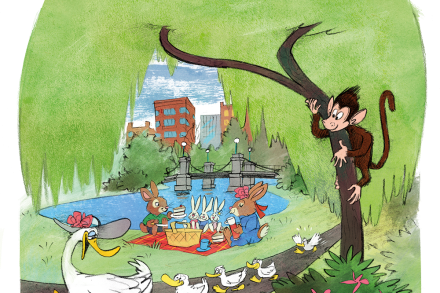
It was Labor Day in Boston and the bronze ducklings in the city’s Public Garden were each wearing a fluffy autumnal scarf. Nobody seems quite sure who dresses them, but at various points they have worn party hats, festive knitwear and hot pink. When the Tartan Army arrived for the World Cup earlier this year, Mrs. Mallard and her ducklings – Jack, Kack, Lack, Mack, Nack, Ouack, Pack and Quack – were forced to endure miniature traffic cones and saltires. The sculpture was created by Nancy Schön in 1987 to celebrate Robert McCloskey’s 1941 children’s book, Make Way for Ducklings. In 1990, former Soviet first lady Raisa Gorbachev visited Boston and admired the statue.

boston

Looking on the bright side of life with Eric Idle

Provence “Would you like to meet Eric Idle? Don’t worry, he and his wife Tania are smashing.” This was 2009. I was visiting my old art teacher from school, Frank Docherty, and his wife, Chrissie, in the village of Montfort-sur-Argens. Eric had a house nearby, they said. They’d got to know one another a few years before when Eric had begun buying Frank’s surrealist paintings. I was too wee for early Python but as a teenager knew every line of The Life of Brian. And all the voices. I apologize now to anyone who was on late-night double-decker buses from Paisley to Glasgow in 1982.

When will I see a Carmen set in 19th-century Seville?

No critic sets out to be a reactionary, even though it’s much easier that way. There’s no real satisfaction in rejecting novelty on sight; no joy in measuring a living performance against your record collection and coming down, every time, in favor of the dead Nazi. I get that. Still, it’s a plain fact that in three decades of regular opera-going, I have never – not once – seen a live production of Carmen that locates the action in 19th-century Seville. Or one that centers the visual elements – mantillas, sunshine, picture-postcard Spanishness – that directors tell us (and how they tell us!) have become such clichés.

carmen

Inside the church of pipe smoking

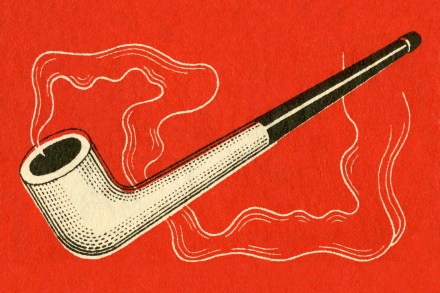
I am a smoker. I can never be sure of the reaction I will get to those words nowadays, though I have hope that Spectator readers are more receptive than most. Anyway, in my case it’s somewhat of an understatement: I worship the goddess Nicotiana. Or, as J. M. Barrie put it: “My Lady Nicotine.” Compton Mackenzie had it, simply, as “Sublime Tobacco.” And for any vegetarians among you, there’s always Frank Zappa’s “my favorite vegetable."  I enjoy many forms of tobacco consumption, but having recently read Thomas Sydenham’s description of a tobacco smoke enema, I am convinced that not all methods are created equal. Cigars? Enjoyable, but exorbitantly expensive. Cigarettes?

Rural France is fighting a boar war

The hunting season began in Burgundy last Sunday. The first couple of weeks are dedicated to the pursuit of small game: pigeons, partridges and hares. Call it the hors d'oeuvre to the main course: the hunting of wild boar, which gets underway in earnest at the start of October. My neighbor, a farmer, hunts, and so does his son and most of their friends. They spent much of Sunday blazing away in the adjacent fields. I felt like I was in the gunfight at the O.K. Corral. Not that I mind. I was a townie in another life but now I’m what the French call a plouc (yokel), and in rural France hunting is sacrosanct. It’s also imperative, specifically the culling of wild boar. Their numbers have exploded in recent years and the damage they do is immense.

AI is turning the world into slop

It seems AI is not just making everyone sound the same, but now everything must look the same too. I haven’t been able to walk into a pub, cafe or shop this summer without noticing the uncanny, slightly unreal sheen of an AI-generated poster. From caricatured cartoon children on a nursery advertisement to an abnormally glistening burger on a food menu, every billboard, flyer and sign now seems to have been regurgitated from the same ChatGPT printing press. We are hurtling ever closer to a flattened future in which everything converges toward the average, the mediocre, the visual mean There are many telltale signs that a sign is generic AI-slop.

ai slop

Meet the adult toddlers who play with toys

A colleague of mine has a sizable collection of sportscars. He has, he notes, every expression of his favorite, the Lotus Esprit. He lovingly cleans them, occasionally changes up the way they’re displayed. What he might then jokingly add is just how easy this is. The biggest of his cars is just a few inches long. They’re models, of the kind that small children might push over the carpet making “brrm, brrm” noises, once they’ve passed out of what the toymakers call the “bash and crash” phase, when motorway carnage is the name of the game.   What might appear strange to an older generation – overlooking their own love of train sets – is that this mid-life interest in toys is not unusual.

We don’t need more Austen adaptations. Or do we?

It’s a shame that Jane Austen can’t profit from selling the adaptation rights to her novels. In her own lifetime, she made but a modest living as a writer. Today, she would be fabulously wealthy.   As it is, the copyright has long expired, so it’s all fair game. In the last three decades alone, Austen’s stories have spawned over a dozen adaptations.

smell

The history and importance of smell for our antiseptic age

For smell historians and experts, of whom there are gratifyingly more than you’d think, a standard assumption to be skewered is that olden ages stank; the modern world doesn’t because hygiene and chemicals have banished stinks in the name of progress. According to this reading of history, banishing odors is a sign of progress. Civilization doesn’t smell. Neither Bjørn Berge nor William Tullett stand for this. For them, older times may have been smellier, but people were comfortable with living alongside middens, rotting corpses and foul tanneries. Smell in the modern age is now under threat and at risk of extinction or of being even more marginalized – Tullett uses the word “ephemeralized” – than it already is in this age of visual primacy and screens.

How the White House fell for the ‘Living Diet’

For the ancient Greeks, it was the shapely buttocks of the famous statue of Aphrodite kallipygos – literally “Aphrodite of the beautiful arse.” The female ideal also included small, pert breasts, pale skin indicative of leisure indoors, away from the sun, and fair reddish or blonde hair. The male ideal, by contrast, was that of the athlete, the body shaped by training in the gymnasium and the wrestling school (palaestra) for competition and, ultimately, war. Defined but not excessive musculature; broad shoulders and narrow waist; tanned skin glistening with olive oil and exfoliated by the scraping of a bronze strigil. And we know the Greeks preferred dainty genitals too – at least in art – as a sign of masculine continence and self-control.

Brown furniture isn’t dead

Throw out your grandfather clocks, the naysayers said, and banish your commodes to the scrapheap and junkshop. Brown furniture – invented in the Georgian and Regency eras and popularized for the mass market in the Victorian period – has been decreed by those tastemakers in the know to be as dead as Jacob Marley – a man who undoubtedly would have cherished those heavy mahogany bed frames and cabinets that were synonymous with his age – and showing even fewer signs of returning, even in spectral form.   The reasons for the apparent demise of brown furniture are less to do with a rejection of sturdy, well-built items that were once the pride and joy of any household and more because we are living smaller lives, in all senses.

brown furniture

Americans can’t write funny novels

If I recommended you an American novel called Stoner, what would you think? You’d probably assume it was some hallucinogen-inspired rubbish from the 1960s by someone who once met Allen Ginsberg. You wouldn’t think it was a plangent, devastating story about the failed life of an English literature academic. That’s because, if a campus novel like this were British, it would have been written by Kingsley Amis, Howard Jacobson or Evelyn Waugh. It would never have had such a terrible title and would also be comic rather than achingly sad. That’s the difference between British and American novels: American novels aren’t funny.

How to end the chaos in college football

For millions of Americans, September not only marks the beginning of fall, it marks the beginning of college football season. The fans pack enormous stadiums, watch on TV by the tens of millions, cheer for their favorite teams and boo their traditional rivals. There are very few fans supporting both Ohio State and Michigan, and neither is supporting Notre Dame. It’s the great American sport.  And it is in deep trouble.  The problem stems from the usual suspects: a few far-reaching court decisions affecting the players, the comatose response of the sport’s ruling body, the NCAA, and the looming threat of government action if private actors can’t solve the problem themselves. So far, those private actors have failed.

college football NIL

The Renoir heist was entirely predictable

Things are tough for French museums right now. A dawn raid on Tuesday at the Musée Renoir in Cagnes-sur-Mer resulted in the theft of two paintings by Renoir worth $10.5 million (another two were stolen but swiftly abandoned). On long term loan from the Musée d’Orsay, the paintings were seized when thieves sliced through the museum's garden fence with an electric saw. Following a spate of thefts from French museums in July, France’s patrimoine is undeniably under threat. The Louvre heist was inspirational While British museums (The Horniman, Pitt Rivers, Ashmolean, Fitzwilliam and occasionally British Museum) busy themselves with the return of their artifacts, the French, it would seem, struggle to keep hold of theirs.

coffee

Coffee-drinking is a cult

Ten years ago, I started getting migraines. They were so bad that when one struck, I babbled nonsense, couldn’t speak, type or write. The swelling in my head, which caused the migraine, was pressing on the language department of my brain. Once recovered, I was confused for days, repeating words three or four times in a row and not quite understanding what was being said to me. This all had to stop immediately, as communication is key to the smooth operation of my life. It was suggested to me that coffee is a common migraine trigger and if I was looking for a culprit I ought to start right there. I immediately cut out the black stuff and the migraines stopped.

Welcome to the Silicon Valley cinematic universe

Yesterday, a teaser dropped for Artificial, a biopic directed by Luca Guadagnino based on Sam Altman’s brief ouster from OpenAI in 2023. Earlier this summer, a trailer was released for The Social Reckoning, Aaron Sorkin’s Meta drama, which is a follow-up to his 2010 film about Mark Zuckerberg and the founding of Facebook, The Social Network. And in the past few days, audiences at the Venice and Telluride film festivals have been hyping up Nathan Fielder’s documentary You Can See Everything about the Theranos founder/fraudster Elizabeth Holmes, as well as Alex Gibney’s Musk documentary. (Gibney made an earlier documentary about Holmes, who has already been the subject of a biopic, played by Amanda Seyfried in The Dropout.

Why I love the NFL

The NFL season kicks off again today with the Seattle Seahawks hosting the New England Patriots in a Super Bowl rematch. It got me thinking about the growing popularity of the sport in my country, the United Kingdom. I got into the NFL at a time when my “soccer” team, Queens Park Rangers, were especially terrible. It was around 2022. The 16-hour round trips to away games in the less salubrious parts of the UK had begun to wear on me. After yet another 1-0 defeat on a cold rainy night in Stoke I realised I needed an escape. The balls-to-the-wall action of the NFL was exactly the thing my life was missing.  I decided to support the Seahawks.

We don’t swear like we used to

In the halcyon, innocent year of our lord 2004, there was a minor political scandal, if you can imagine such a thing. Then-Vice President Dick Cheney was questioned by a Democratic senator about his financial ties to a government contractor during a photo op. Cheney’s response was short but far from sweet: the inquisitive senator was told to go “fuck yourself.” A few years later, reminiscing happily about the moment during a radio interview, Cheney doubled down on his mot juste, saying “You’d be surprised by how many people liked that. That’s sort of the best thing I ever did.”  A sad state of affairs indeed, and I’m not talking about the long decline of inter-party discourse. I mean the decline of swearing, in its quality, if not quantity.

How to eat your way through Bourdain’s New York

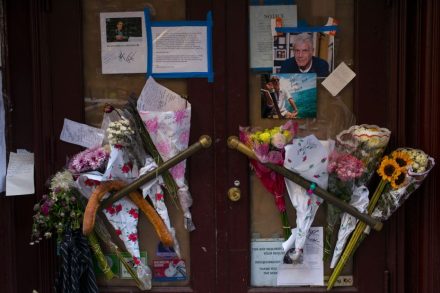
To experience the Big Apple properly, you don’t just take a bite: you take a carbohydrate-laced mouthful. Think smoked salmon bagels thick with cream cheese or $2 pizza slices dripping with grease. Think warm, salted pretzels, or frankfurters from a street kiosk, or steaks as big as the genetically modified cows from whence they came. Even so, for the full I <3 NYC gastronomic voyage, there’s only one restaurateur whose bagel-crumb trail is worth following: Anthony Bourdain, of course. The “bad boy” Big Apple he represented is a city long devoured and spat out Why, eight years after his death, are we still feasting on our obsession with “Tony” (as last month’s biopic would have us call him)?

How Charles de Gaulle won over Gen Z

It turns out that this summer’s cinematic hero is not Spiderman or even Odysseus, but the French wartime leader Charles de Gaulle who has knocked both Marvel and Homer into a kepi (the French military hat he favored).   De Gaulle, a two-part, six-hour epic directed by Antonin Baudry has been a surprising hit in France and is in demand from all the major international markets, including those of Latin America, India and China. The buzz is remarkable for a foreign-language film starring a person who, although a national hero in his homeland, is not a global household name.